

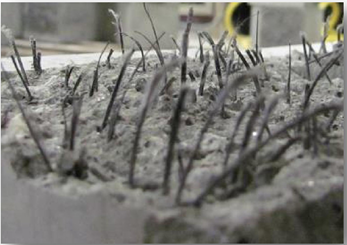
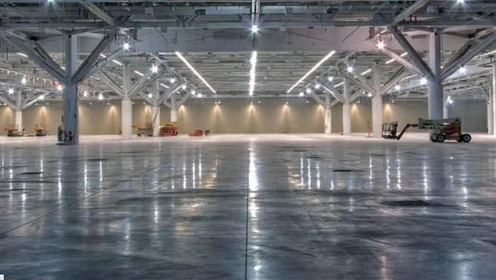

Macro Synthetic Fibers are classified into three types as follows:
- Micro Synthetic Fibers:
Provide secondary reinforcement; short and fine fibers used to control plastic shrinkage cracking.
Dosage: 0.6–0.9 kg/m³ - Macro Synthetic Fibers:
Longer and thicker fibers used to control shrinkage cracks and partially replace structural reinforcement steel.
Dosage: Determined according to technical requirements and calculation formulas (1.5–10 kg/m³)
| Property | Specification |
| Material | Polypropylene / Polyethylene blend |
| Density | 0.92 |
| Typical dosage | 1.5–10 kg/m³ |
| Length | 51 mm |
| Length / Diameter ratio | 74 |
| Tensile strength | 600–650 MPa |
| Elastic modulus (according to EN 14889.2) | 9.5 GPa |
| Melting point | 160°C |
| Electrical and thermal conductivity | Low |
| Water absorption | Almost negligible |
| Alkali resistance | Excellent |
| Color | White |
| Number of fibers per kg | 59 |
- Steel Fibers:
Longer and larger fibers used in structural applications with high load-bearing requirements.
Dosage: Determined according to technical requirements and calculation formulas, up to 60 kg/m³
Outstanding Features:
- Serve as a substitute for secondary reinforcement, controlling plastic shrinkage caused by temperature variations
- Provide greater toughness and impact resistance
- Improve the flexural strength of concrete
- Reduce water permeability and enhance waterproofing performance
- Suitable for areas requiring non-metallic materials
- Corrosion-resistant, non-rusting
- Lighter than steel fibers and used in smaller quantities
- Reduce material wastage, saving cost and construction time
Lower carbon emissions